May 4, 2026 • Celeste Morrow • 9 min reading time • Prices verified June 6, 2026
Faux Stems for Tall Vases: Proportion Math and Material Decoding for Statement Arrangements
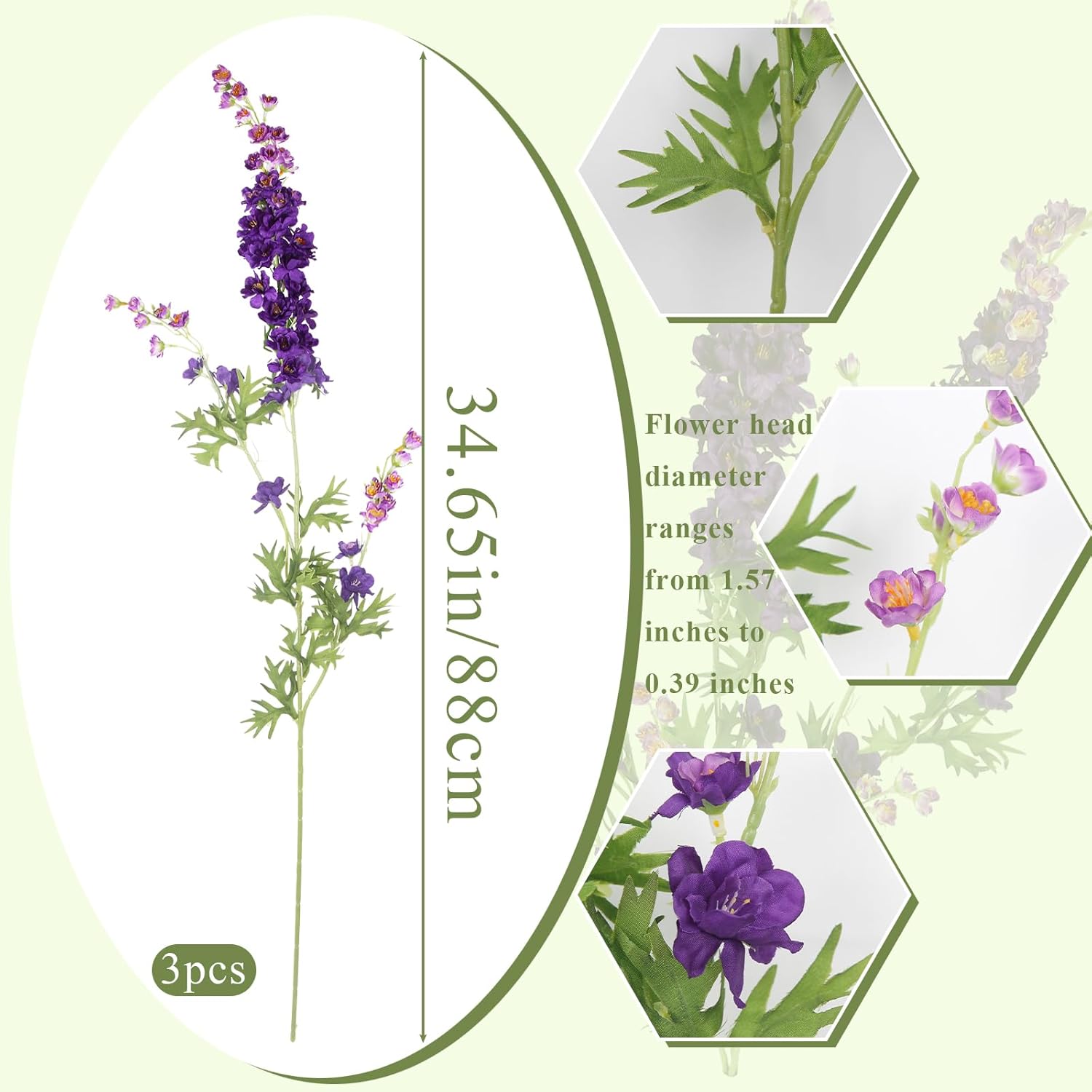
A tall vase — anything roughly 16 inches or higher — is one of the most common places a faux floral arrangement goes wrong. The problem is almost never the flowers themselves; it’s the proportion relationship between stem height, vase height, and room scale, combined with a material choice that reads cheaply once it’s elevated to eye level. Faux botanicals (artificial flowers and foliage made from silk, polyethylene, latex, or preserved natural plant matter) have gotten remarkably realistic in the mid-to-upper price tiers, but a stem that looks convincing in a product photo can look stiff and synthetic the moment you drop it into a 24-inch cylinder vase and step back six feet. This guide gives you the proportion formula that working floral stylists use, decodes the four main material types so you can evaluate them from a product listing alone, and ends with a clear decision framework for the most common tall-vase scenarios you’re likely to encounter right now.
The Proportion Formula (and Why Most Buyers Get It Wrong)
The foundational rule in floral design — codified in curricula from institutions like the Floral Design Institute — is that stem height above the vase lip should be 1.5× to 2× the vase height for a traditional, balanced look. For a dramatic, architectural statement (think hotel lobby or wedding arch backdrop), that multiplier can push to 2.5×. Below 1.5× and the arrangement reads stubby; the eye expects generosity and gets restraint instead.
By the numbers:
| Vase height | Minimum stem above lip | Statement-scale stem above lip |
|---|---|---|
| 16 in | 24 in | 32–40 in |
| 20 in | 30 in | 40–50 in |
| 24 in | 36 in | 48–60 in |
Total stem length (what you’re buying) equals vase height + stem-above-lip target. A 20-inch vase aiming for a 1.5× above-lip height needs stems that run 40 inches total — and that’s before accounting for any floral foam or filler base inside the vase that raises the anchor point.
The mistake most buyers make is purchasing stems by the listed length without doing this subtraction first. A 36-inch amaranthus stem sounds long; dropped into a 24-inch vase with 4 inches of foam base, it clears the lip by only 8 inches — roughly 0.33× the vase height. The result looks like a flower arrangement that gave up halfway through.
Stem count matters almost as much as height. The Spruce’s guide to arranging artificial flowers in a vase recommends thinking in odd numbers (3, 5, 7 stems per focal variety) for naturalistic groupings, and layering at least three height tiers — a tall focal, a mid-height secondary, and a low filler — to avoid the flat-topped look that telegraphs “artificial” immediately. For a 20-inch vase at statement scale, a working practitioner’s starting point is typically 5–7 focal stems, 5 secondary stems, and 7–9 filler or foliage stems, adjusted for stem diameter and bloom width.
Material Decoding: What You Can Actually Determine from a Product Listing
This is where the real money decisions live. Four material categories dominate the faux stem market, and each has a specific realism profile and durability arc that matters a great deal when a stem is sitting at eye level in a tall vase.
1. Polysilk / Fabric Silk
The most common mid-market material. “Polysilk” is a polyester-weave fabric heat-pressed or dye-printed to simulate petals and leaves. Quality ranges enormously. Indicators to look for in product descriptions and photos:
- Petal edge detailing: Higher-grade polysilk has slightly irregular, softly ruffled edges. Perfectly uniform, crisp edges indicate lower-quality construction that reads synthetic under close inspection — a problem in tall-vase applications where the blooms are often near face level.
- Color graduation: Look for descriptions mentioning “hand-painted tips,” “ombre coloring,” or “natural color variation.” Flat single-color petals are the fastest tell.
- Stem wrapping: Quality polysilk stems are wrapped in floral tape or fabric; bare green plastic wire is an immediate realism failure at any viewing distance under 10 feet.
Brands like Winward Silks have built their reputation in this category by controlling the fabric weave spec and petal-shaping process at the manufacturer level — reviewers at House Beautiful consistently call out the leaf veining detail as a differentiator from mass-market alternatives.
2. Real-Touch / PE (Polyethylene)
Real-touch stems use soft polyethylene molded from actual plant specimens, giving petals and leaves a slightly waxy, tactile quality that’s very close to living material. This is the material category where the realism ceiling is highest for home and hospitality applications.
Key listing signals:
- “Real-touch” or “soft-touch” in the product name is meaningful when used by established brands (Afloral, Nearly Natural’s premium tiers), but has been adopted as marketing language by lower-quality manufacturers. Cross-reference with price: genuine PE molded stems cost more to produce. Under $6–8 per stem for a large-bloom PE flower is a signal worth scrutinizing.
- Leaf surface description: PE leaves should mention visible venation (the network of veins pressed into the mold). “Lifelike leaves” without venation description is often a sign of fabric construction marketed as PE.
- Color depth: PE petals hold color at depth because the pigment is in the material, not on a surface coating. Reviewers across aggregated retail review data consistently note that PE stems resist fading better than fabric silk under direct or indirect light — a significant factor for tall vases near windows.
Afloral’s sourcing standards, as described in their published brand materials, emphasize PE construction for their higher-end stem lines, and professional event designers sourcing for wedding installations note in reviews that the material holds up across multi-day events without wilting or flattening.
3. Preserved Florals
Preserved flowers are real flowers — typically roses, pampas grass, eucalyptus, or dried botanicals — treated with glycerin or similar processes to halt decay and maintain form. Venus ET Fleur and Primrose London operate in this category at the luxury end.
For tall-vase applications, preserved stems introduce a different risk profile than synthetic materials:
- Humidity sensitivity: Preserved botanicals are sensitive to high humidity and direct sunlight, which can cause petal breakdown or color shift. Architectural Digest’s feature on styling faux florals notes this limitation explicitly for preserved roses in particular — they’re best suited to climate-controlled interiors, not entryways or event tents.
- Stem flexibility: Preserved stems are often more brittle than PE or fabric alternatives. In tall arrangements where stems may need to be bent or angled for naturalistic positioning, this matters.
- Longevity ceiling: Manufacturer claims typically run 1–3 years for preserved florals under optimal conditions. PE and quality polysilk arrangements, by contrast, can run 5+ years in low-UV environments based on long-run owner reviews.
The cost-per-year math often shifts the calculus: a $280 preserved rose arrangement lasting 18 months in a lobby application costs more annually than a $180 PE alternative lasting 4+ years.
4. Dried Naturals (Pampas, Bunny Tail, Dried Botanicals)
Not synthetic at all — these are real plant material harvested and dried. They behave differently from preserved stems: no chemical treatment means they’re more fragile and more susceptible to shedding, but they also carry the most organic realism. Brides magazine’s coverage of wedding florals consistently notes dried pampas and bunny tail grasses as top choices for tall-vase applications precisely because the scale and movement read naturally even across a large venue.
Trade-offs for practitioners: shedding is real and increases in high-traffic or high-airflow environments. For permanent hospitality installs, a sealed or powder-coated dried stem (some specialty suppliers offer this treatment) extends usable life considerably.
Reading Realism from Product Photos Alone
Since practitioners are often buying from digital catalogs without handling the product first, here are the photo-analysis patterns that aggregate reviewer feedback and published design guidance consistently surface:
Look for negative space in the bloom: Real flowers have depth — petals overlap, create shadows, reveal inner structure. Product photos showing a flat, evenly-lit bloom with no shadow variation are often hiding construction shortcuts.
Check the stem-to-bloom ratio: Overly thick stems relative to bloom size is a factory-production artifact. Cross-reference a product stem diameter (usually listed in specs) against the natural plant if you’re unsure.
Zoom on the leaf attachment points: Where leaves join the stem is one of the most commonly faked details. Quality construction shows a natural narrowing and slight color variation at the junction; cheap construction shows a uniform plastic collar.
Look at how stems photograph from below: Sellers confident in stem-wrap quality show understem and side-angle photos. Listings with exclusively top-down bloom photography are often concealing bare-wire stems.
Decision Framework: If X, Then Y
You’re placing an order now. Here’s the clear routing logic:
If the vases are permanent (hotel lobby, residential install, retail VM display) and within 8 feet of viewer traffic: Invest in PE real-touch or quality polysilk from a named brand with visible veining specs. The realism premium pays back across a 3–5 year lifespan. Expect $25–60+ per stem for focal flowers.
If the arrangement is for a single event (wedding, corporate dinner, styled shoot): Dried naturals and mid-tier polysilk are the value-rational choice. Per-stem cost matters more; longevity does not. Afloral and similar event-volume suppliers offer stem bundles optimized for this use case.
If the vase is 20+ inches and will be viewed from across a room (not up close): Material realism matters less; proportion and stem count matter more. A correctly proportioned arrangement in mid-tier polysilk will read better at distance than a poorly proportioned arrangement in premium PE. Do the height math first; allocate budget to stem count before material grade.
If humidity or direct sun exposure is a variable: Eliminate preserved florals from consideration. PE or fabric silk will outperform on durability. If dried naturals are an aesthetic requirement, ask the supplier explicitly about shed-resistance treatments.
If you’re working from a product listing with no in-hand sample: Run the photo-analysis checklist above before ordering. For high-stakes installs, order a single stem or small bundle before committing to volume — most reputable specialty suppliers (Afloral, Winward Silks) support this workflow, and the sample cost is trivial against a $400+ order gone wrong.
The single most common recoverable mistake in tall-vase faux arrangements is under-sizing stem length. Do the proportion math before you add anything to cart. Everything else — material choice, stem count, color — is easier to optimize once the heights are right.