May 4, 2026 • Celeste Morrow • 10 min reading time • Prices verified June 6, 2026
Real-Touch Latex vs. Silk Hydrangeas: An Honest Material Breakdown for Home Decorators
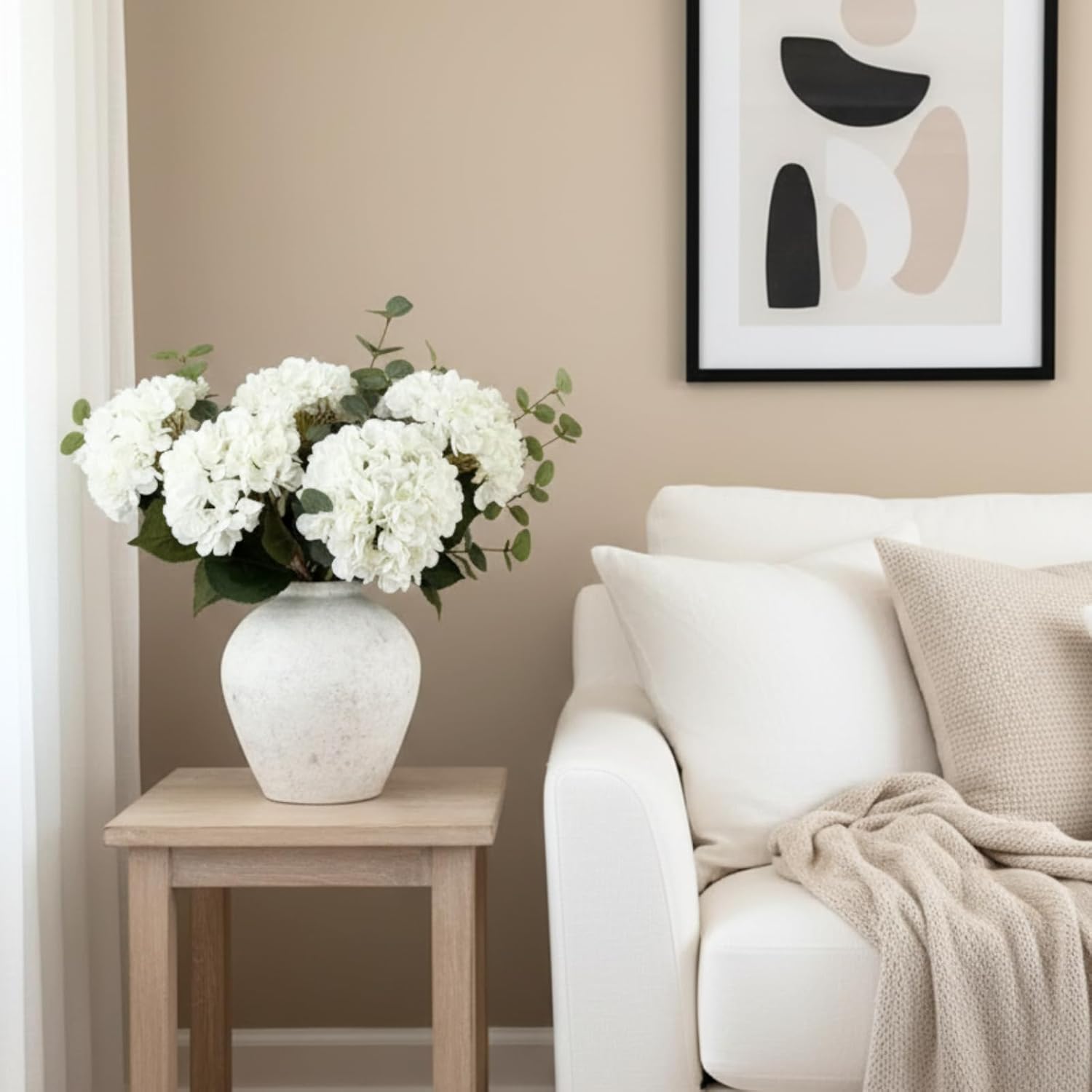
If you’ve ever stood in front of two nearly identical-looking hydrangea stems — one priced at $12, the other at $65 — and had absolutely no idea why one costs five times more, you’re in good company. The short answer is almost always the material. Faux botanicals are made from a range of synthetic materials, and the two you’ll encounter most often when shopping for hydrangeas specifically are silk (a woven polyester fabric stretched over a wire frame and shaped to mimic petals) and real-touch latex (a rubber-based coating applied over fabric or molded directly into petal shapes, engineered to feel and flex the way a living flower does). The material determines how realistic the flower looks up close, how it holds up over years of display, and whether it can survive the conditions of your specific room or event. This guide walks through both options honestly — the strengths, the trade-offs, and the decision framework — so you can match the right material to your actual use case.
What You’re Actually Buying: How Each Material Is Made
Understanding the construction tells you almost everything about the performance.
Silk hydrangeas in the modern faux floral market are rarely made from actual silk fiber — the term is more of a category name than a material disclosure. What you’re typically buying is a polyester fabric (sometimes described on product pages as “polysilk”) that has been stamped, heat-shaped, and hand-assembled into individual florets, then clustered onto a wire stem. Better-quality silk hydrangeas include printed or hand-painted veining on the leaves, textured petal surfaces with subtle color gradation (called “color-wash” finishing in trade specs), and wrapped wire stems that hold their shape when bent for arranging.
Entry-level silk — the $8–$20 range sold at most craft chains — tends toward flat petal surfaces, uniform color, and a slight sheen that reads as obviously synthetic from arm’s length. As you move up the price band toward premium-tier brands, the fabric quality and finishing improve considerably. Apartment Therapy, in their buyer’s guide “The Best Faux Flowers That Actually Look Real,” notes that the gap between a budget craft-store stem and a premium silk stem is visible from across a room — particularly with hydrangeas, whose densely clustered florets make any flatness or color uniformity immediately apparent.
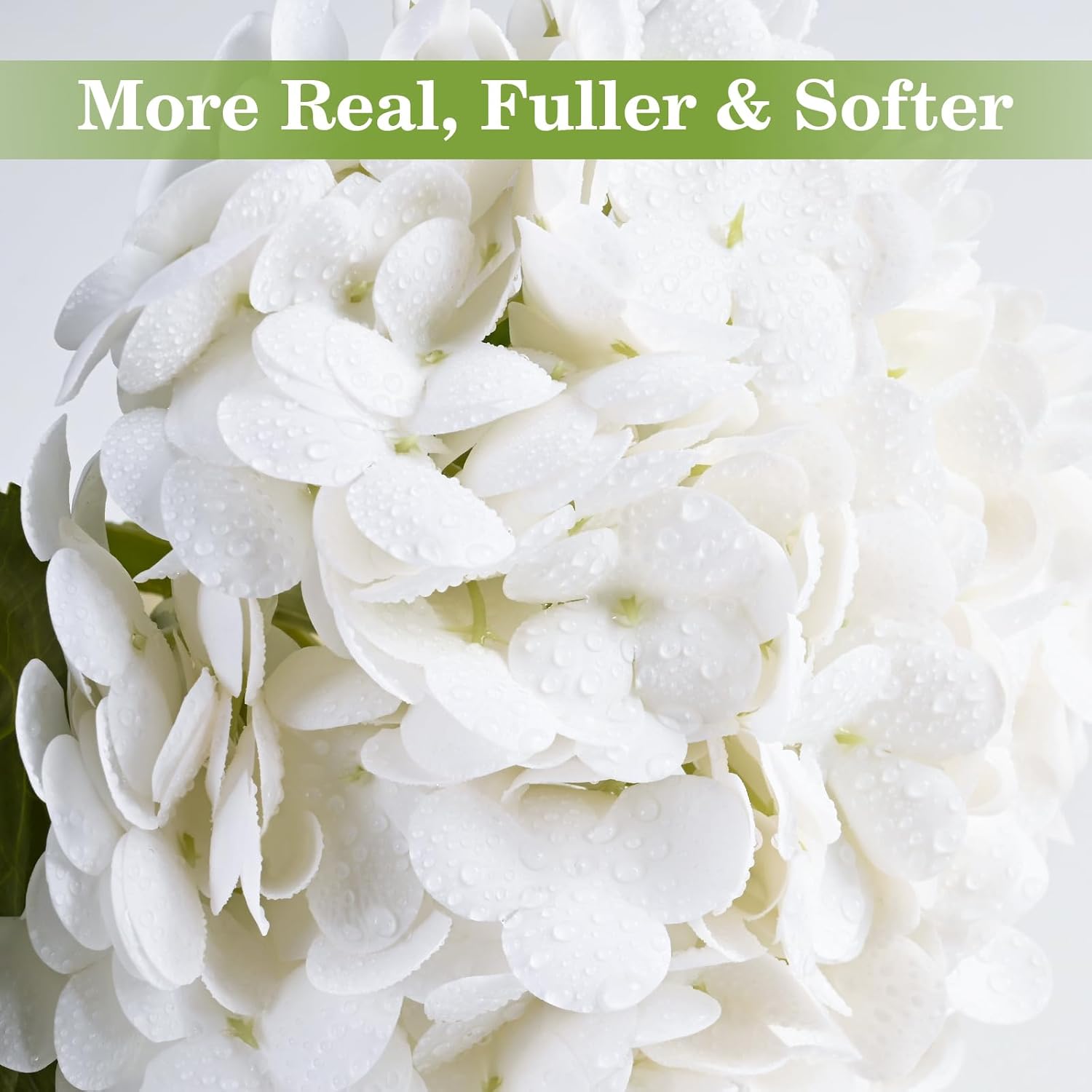
Real-touch latex hydrangeas use a different manufacturing process. Individual petals are either dipped in or molded from a natural or synthetic latex compound, which gives them a slightly soft, yielding texture when pressed — closer to the feel of a fresh petal than any fabric can achieve. The latex surface also takes color more subtly, allowing for tonal variation (pale blush at the tip, deeper rose at the base) that makes the flower read as biologically plausible. The trade-off is that latex is heavier, less flexible for extreme repositioning, and more sensitive to temperature and UV exposure over time.
House Beautiful, in their feature “The Best Artificial Flowers for Every Room,” notes that real-touch latex has become the default material specification for luxury residential installs and boutique hospitality projects precisely because it passes the “three-foot test”: examined at conversation distance, it does not declare itself as fake.
The Performance Comparison: Realism, Durability, and Environmental Sensitivity
This is where the decision gets specific to your actual room and use case. The three subsections below each close with a tier recommendation so you can quickly locate the guidance that matches your budget and situation.
Realism at Close Range
Real-touch latex wins on close-up realism. The surface texture, slight translucency, and petal flexibility are difficult for silk to replicate. If your hydrangeas will be in a low centerpiece where guests are seated around them, in a bedside vase where you interact with them daily, or in a photography context — editorial shoots, product styling, event photography — latex is the material that holds up to scrutiny at arm’s length and closer.
Silk’s realism ceiling is lower, but it’s more than sufficient for elevated placements: a mantel arrangement viewed from six feet, a high shelf installation, or a wedding arch where volume and color read matter more than petal-by-petal authenticity. Brides, in their editorial guide “The Best Fake Flowers for Weddings,” points out that for arch installations specifically, the density and scale of the arrangement matter far more than individual stem realism — making high-quality silk a smart choice at volume, where budget has to stretch across hundreds of stems.
For close-range, high-scrutiny display: latex is the realism leader.
Real
$29.98
In stock on Amazon
Check price on AmazonDurability and Longevity
This is where silk often outperforms its reputation.
Typical performance benchmarks:
- High-quality silk hydrangeas are rated by most manufacturers for 3–5+ years of indoor display without significant color fade
- Real-touch latex hydrangeas typically carry manufacturer guidance of 2–4 years before latex begins to yellow or develop surface tackiness, with UV exposure accelerating degradation
- Direct sunlight exposure reduces both materials’ lifespans significantly; latex degrades faster than polysilk under equivalent UV load
The latex limitation is worth taking seriously. The material’s vulnerability to UV light and heat means a window-adjacent arrangement that looks magnificent in January can show surface yellowing or stickiness by the following summer. Silk, by contrast, may fade gradually over time but doesn’t degrade structurally in the same way.
For permanent installations in climate-controlled interiors away from direct sun — hotel lobbies, interior-facing residential rooms, display cases — latex performs excellently over its rated lifespan. For sunlit kitchens, conservatories, or outdoor-adjacent settings, silk’s resilience is a genuine practical advantage.
The Spruce, in their care reference “How to Care for Artificial Flowers,” notes that silk is generally more forgiving of ambient conditions, while latex rewards careful placement and handling with a longer window of peak appearance.
For long-cycle, low-maintenance longevity in varied home conditions: silk is the durability leader.
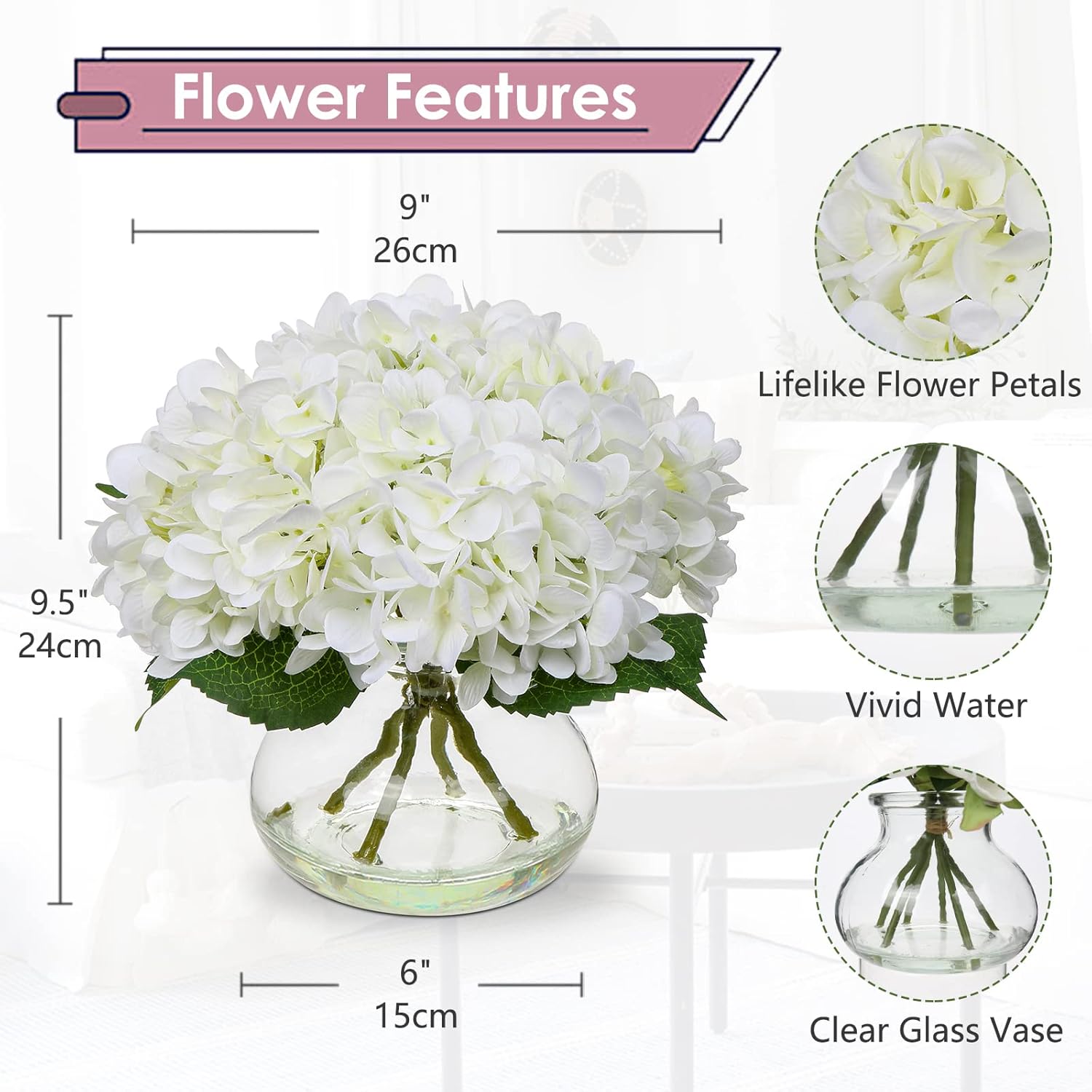
Hollyone
$28.99
In stock on Amazon
Check price on AmazonCleaning and Everyday Maintenance
Both materials require gentle care, but the approach differs in important ways. Silk hydrangeas can be refreshed with compressed air or a very light mist of water — let them dry fully before returning to an arrangement. Latex hydrangeas should not be misted; moisture can affect the surface finish over time. They are best cleaned with a soft, dry brush or microfiber cloth. For households with children, pets, or high foot traffic, silk’s greater tolerance for casual maintenance is a real-world advantage that’s easy to underweight when shopping.
Entry-level silk stems — the $3–$8 range — are easy to clean but age quickly. For a budget arrangement that will be refreshed seasonally, they represent an acceptable trade-off. For anything intended to last multiple years, mid-tier and above is the practical floor.
For buyers who want minimal maintenance and easy cleanup: entry to mid-tier silk is the practical default.
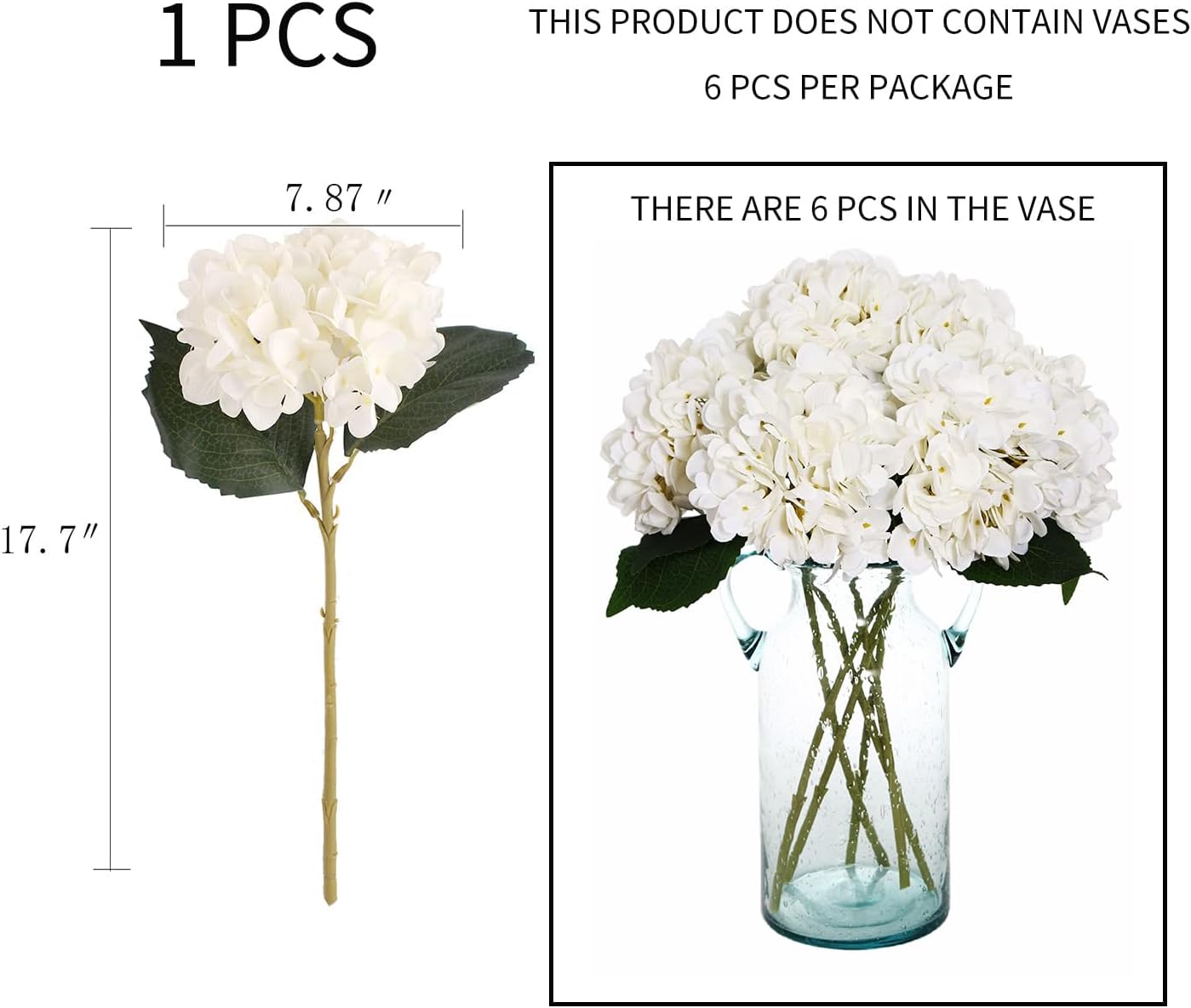
Kimura's
$18.99
In stock on Amazon
Check price on AmazonPrice Reality and Cost-Per-Year Math
Let’s make this concrete. As of mid-2026, typical price bands look like this:
| Material & Category | Price Range (per stem) | Est. Lifespan | Tier |
|---|---|---|---|
| Entry silk (craft brands) | $3–$8 | 1–2 years | Kimura’s — $18.99 |
| Mid-tier silk | $12–$25 | 3–5 years | Hollyone — $28.99 |
| Premium silk | $30–$55 | 5+ years | Real — $29.98 |
| Real-touch latex (mid-tier) | $18–$35 | 2–3 years | Hollyone — $28.99 |
| Real-touch latex (premium) | $45–$85 | 3–4 years | Real — $29.98 |
The cost-per-year math often surprises people. A $55 premium silk stem held for five years works out to roughly $11 per year. A $65 premium latex stem with a realistic three-year lifespan in a moderately bright room runs closer to $22 per year. For a permanent home arrangement in an interior room, premium silk is frequently the smarter long-run investment — not because it’s cheaper upfront, but because its lifespan advantage is real under everyday conditions.
Where latex earns its premium is in short-cycle, high-visibility contexts: a wedding where photography is the primary deliverable, a styled shoot, a seasonal display changed out every 12–18 months, or a hospitality install where close-range impact justifies the material cost. Architectural Digest, in their coverage of luxury faux botanical trends titled “High-End Faux Botanicals Worth the Investment,” notes that design clients increasingly ask for real-touch specification by name — not because they’re unaware of the durability trade-off, but because they treat premium faux florals as a rotating seasonal investment rather than a permanent fixture.
Where Each Material Actually Belongs: The Decision Framework
When to Specify Real-Touch Latex
Choose real-touch latex when the arrangement will be examined at arm’s length or closer — a dining table centerpiece, bedside vase, or event centerpiece where guests are seated nearby. Latex is also the correct call when the installation is being photographed professionally: editorial shoots, wedding photography, and portfolio work all benefit from the material’s surface authenticity under close lighting. The use case caveat is firm: the room should be climate-controlled and away from direct sun, and the project should have a defined lifecycle of 18–24 months with a planned refresh built into the budget.
Real
$29.98
In stock on Amazon
Check price on AmazonWhen to Specify Premium Silk
Choose premium silk when the installation is permanent or long-cycle — three or more years without planned replacement. Silk is also the right call for elevated or distant positions (mantel, high shelf, arch, backdrop), spaces with significant natural light, and any context where colorfast durability over time is non-negotiable. For building at volume — a wedding arch, stage backdrop, or retail display — the per-stem cost advantage of silk compounds quickly. Brides, in “The Best Fake Flowers for Weddings,” reinforces this: at arch scale, volume and color read outweigh individual petal realism, and silk’s durability and price point make it the professional default for large installations.
Hollyone
$28.99
In stock on Amazon
Check price on AmazonThe Practical Middle Ground: Mixed-Material Arrangements
Both Apartment Therapy, in “The Best Faux Flowers That Actually Look Real,” and House Beautiful, in “The Best Artificial Flowers for Every Room,” surface a technique worth knowing: mixing materials within a single arrangement is a legitimate and widely used designer approach. Placing real-touch latex hydrangeas at the visual focal point of an arrangement — the stems closest to eye level, the cluster a guest’s gaze lands on first — and surrounding them with silk filler stems and greenery gives you close-up realism where it counts without paying latex prices for every stem.
Professional floral stylists use this approach for event work regularly, and it translates well to residential projects with a defined focal vase or centerpiece. It’s also a practical way to manage budget when you have a specific hero flower in mind but need to fill out the arrangement economically. For most home decorators working in the $40–$120 range on a living room or dining arrangement, a mixed-material strategy centered on mid-to-premium silk is the better default: more forgiving in real-world conditions, longer-lasting under typical home lighting, and the realism gap — while genuine — is less dramatic in practice than the marketing language around latex sometimes implies.
Hollyone
$28.99
In stock on Amazon
Check price on AmazonA Final Word on Sourcing
Whichever material you choose, brand and retailer matter as much as the material specification. Latex quality varies enormously between manufacturers — a latex stem from a reputable premium supplier performs very differently from an unbranded import described only as “real touch” on a product page. Read the product description carefully: credible listings will name the material explicitly, describe the stem construction (wire gauge, wrapping), and often specify the petal count per head. Vague listings that lean only on photography should be treated with skepticism.
The same applies to silk. “Silk” as a category spans everything from heat-stamped polyester that reads as fake from across the room to hand-finished premium stems that earn genuine double-takes. Price is a signal, but the written description — petal coating, color-wash finishing, stem wrapping detail — is the more reliable guide. The Spruce, in “How to Care for Artificial Flowers,” also notes that stems purchased from established specialty retailers tend to carry more consistent material standards than general import marketplaces, where grade labeling is frequently inconsistent.
Learn to read product descriptions carefully, match the material to the specific conditions of your room and project timeline, and the choice between silk and real-touch latex becomes far less mysterious — and far easier to get right the first time.