May 10, 2026 • Celeste Morrow • 10 min reading time
Faux Peonies Decoded: Silk vs. PE vs. Real-Touch and the Stem-Count Math for Centerpieces
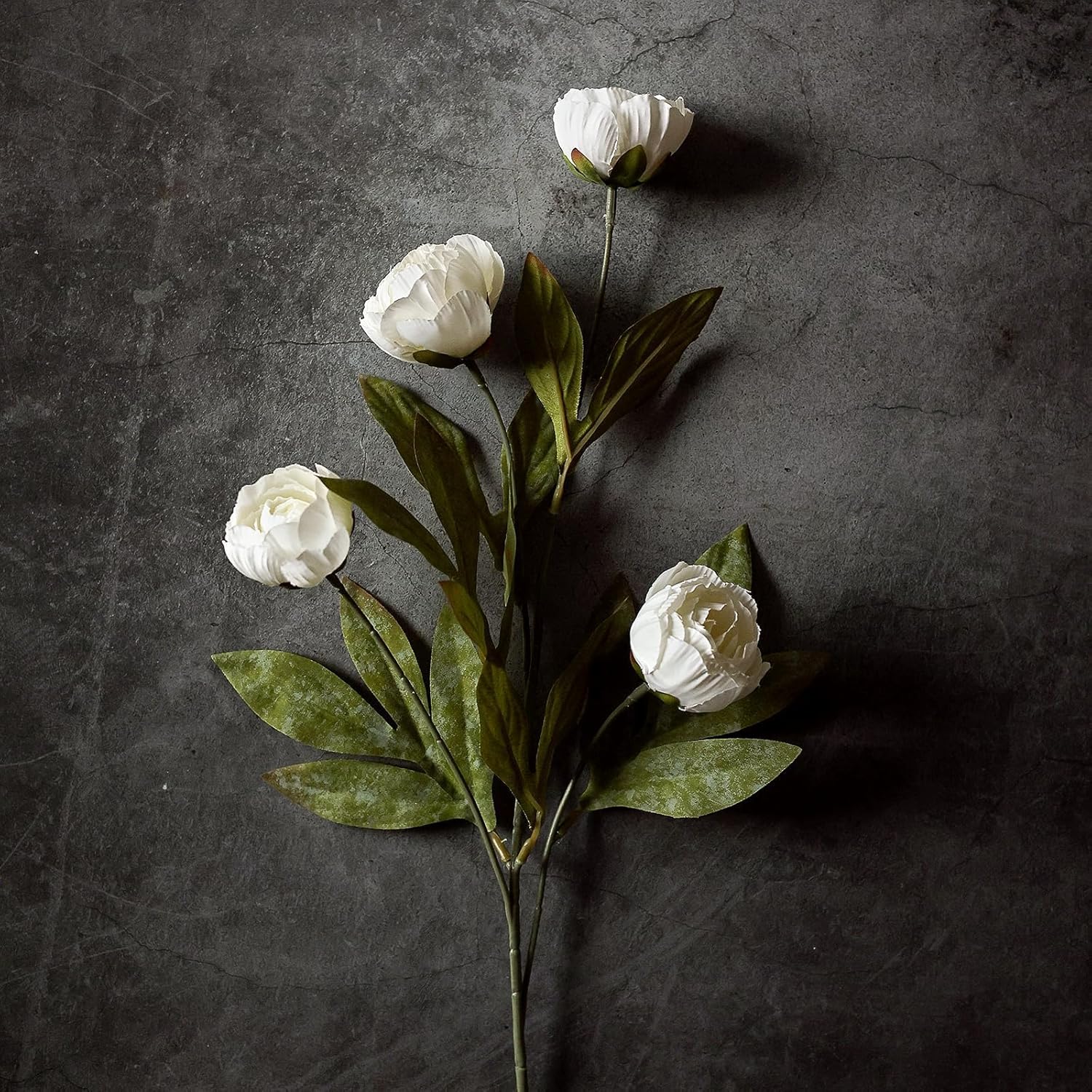
Peonies are among the most beloved flowers in weddings and home décor — those big, blowsy blooms that look like they’re bursting open with layer after layer of petals. The catch: real peonies have a two- to three-week season and a short vase life once cut. That’s why faux (artificial) peonies have become a serious design category in their own right. If you’re new to this space, “faux” simply means flowers made from synthetic materials — no watering, no wilting, no seasonal availability window. This guide covers the three main material types you’ll encounter when shopping for artificial peonies — silk, PE (polyethylene), and real-touch latex — explains exactly what each delivers and what each sacrifices, and then does the stem-count math so you can place your order with confidence. Whether you’re outfitting one dining table or a forty-table wedding reception, the framework here applies directly to your current project.
| EDITOR'S PICK[VIERENA 6 Pcs Faux Silk Peony A…](https://www.amazon.com/dp/B0G7XDGPXQ?tag=greenflower20-20) | Mid-tier[4 Bundles Artificial Peonies Si…](https://www.amazon.com/dp/B09CV287R5?tag=greenflower20-20) | Budget pick[MARTINE MALL 2 Packs Peonies Ar…](https://www.amazon.com/dp/B0D17FK32W?tag=greenflower20-20) | |
|---|---|---|---|
| Stem count | 6 | — | 2 |
| Stem length | 27" | — | — |
| Color included | — | White | Mixed Pink |
| Use case | DIY centerpiece | Table centerpiece | Table centerpiece |
| Price | $40.49 | $16.98 | $9.19 |
| See on Amazon → | See on Amazon → | See on Amazon → |
The Three Material Types, Honestly Compared
Before you can make a smart buying decision, you need to understand what the material label on a product page actually tells you about how a peony will look, hold up, and photograph. The three H3 sections below each close with a tier marker so you can match material to budget at a glance.
Silk (Polysilk / Fabric-Petal)
“Silk” in the artificial flower industry almost never means real silk. It’s marketing shorthand — what you’re actually buying is a fabric-petal flower, typically made from polyester or nylon stretched over a wire frame. The more accurate trade term is “polysilk,” and you’ll see it used by wholesale buyers and floral designers.
What it does well: Silk peonies are the most widely available faux peony format, spanning everything from $3–$8 single stems at craft-supply retailers to $18–$30 premium-tier stems from trade-grade brands. The Spruce’s buying guide “The Best Artificial Peonies” and Apartment Therapy’s roundup “The Best Faux Flowers That Actually Look Real” both note that higher-grade polysilk peonies — those with individually wired petals and a matte-satin finish — hold up to repeated handling and photograph well at normal social-media distances of one to four feet.
Where it falls short: Up close — within arm’s reach, which is exactly where guests interact with a centerpiece — fabric petals can betray their synthetic nature. The surface texture is uniform in a way real petals are not. Color gradients (the blush-to-cream fade at the center of a real peony) are printed or dyed onto fabric, and economy versions show banding or color-registration errors. Petal edges on budget silk stems often lack the gentle translucency that natural petals show when backlit by ambient light.
When to buy it: Ceremony backdrops, arches, hanging installations, and any application where flowers are viewed at five feet or more. Also the right call for high-volume, one-time-use event work where total stem count drives the budget more than per-stem realism.
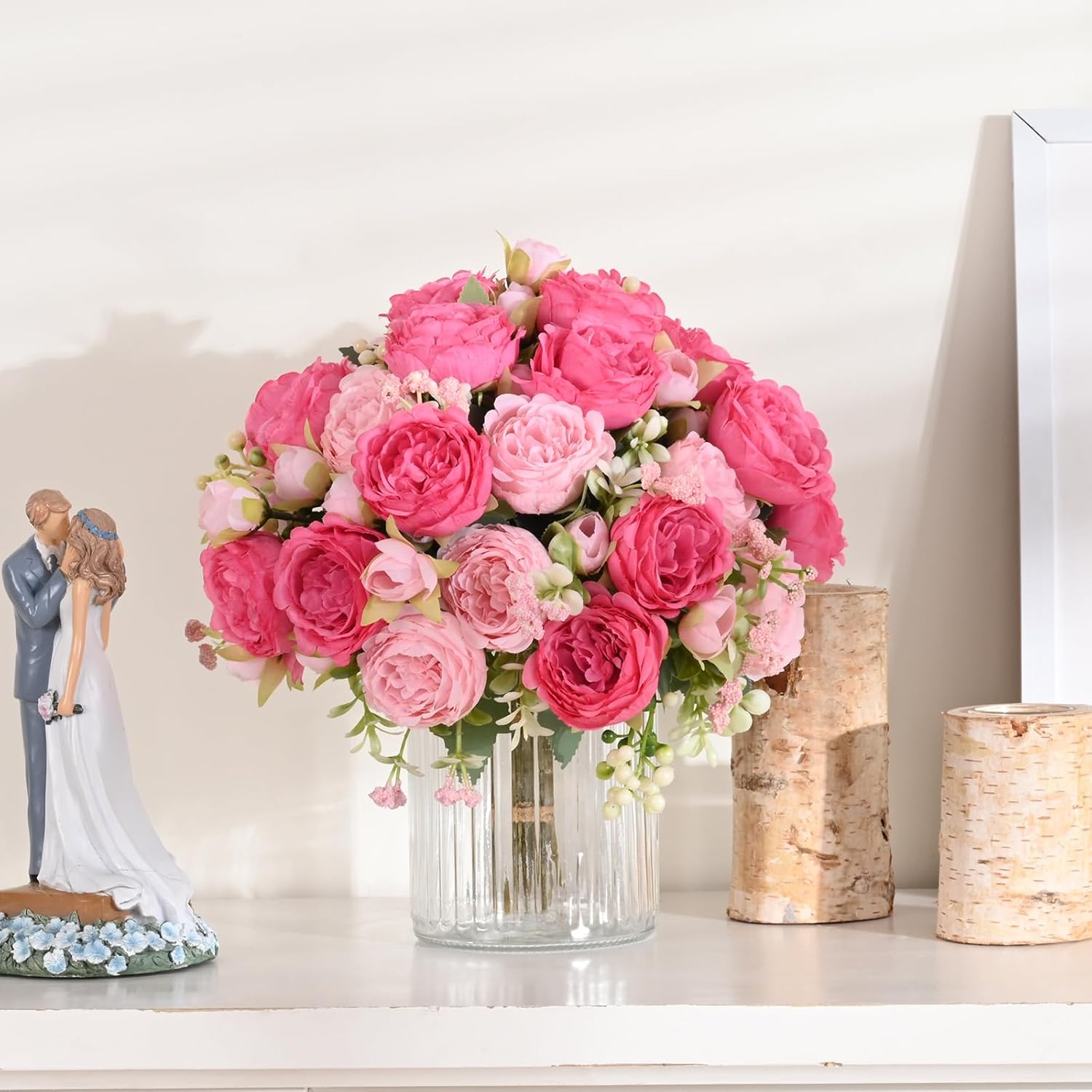
MARTINE
$9.19
In stock on Amazon
Check price on AmazonPE (Polyethylene, Molded-Petal)
PE peonies are manufactured by injection-molding or blow-molding each petal individually from polyethylene plastic, then hand-assembling them around a wire core. The process costs more to manufacture than fabric-petal construction, and it shows in the finished product. Because each petal is three-dimensional and in many cases molded from a real flower scan, the surface has natural-looking variation — gentle ridges, a slight waxy sheen, and edge curl — that fabric simply cannot replicate.
What it does well: PE peonies are the standard choice for permanent residential installs, boutique hotel lobbies, and luxury retail visual merchandising where flowers sit at touch-proximity indefinitely. The Spruce’s buying guide “The Best Artificial Peonies” specifically calls out PE construction as the material to prioritize when realism at close range is the primary criterion. Colorfast performance is also meaningfully better than fabric — PE pigment is mixed into the material rather than printed on a surface, so it resists UV fading more effectively over multi-year deployment. Stems in the $30–$80 per-stem range tend to be PE or PE-hybrid construction.
Where it falls short: Weight. PE peonies are noticeably heavier than silk, which matters when you’re building floral-foam arrangements or topiaries where stem weight affects structural balance. They’re also less forgiving of tight compression during shipping — molded petals can crack at thin edges if packed carelessly, and this is the most common damage pattern flagged in reviews of PE stems across multiple editorial platforms. Order with enough lead time to receive, inspect, and replace damaged stems before your install date.
When to buy it: Permanent or semi-permanent home and hospitality installations. High-end wedding centerpieces where guests will be seated close to arrangements throughout an event. Any project where you’re billing for premium materials and your client will notice the difference at close range.
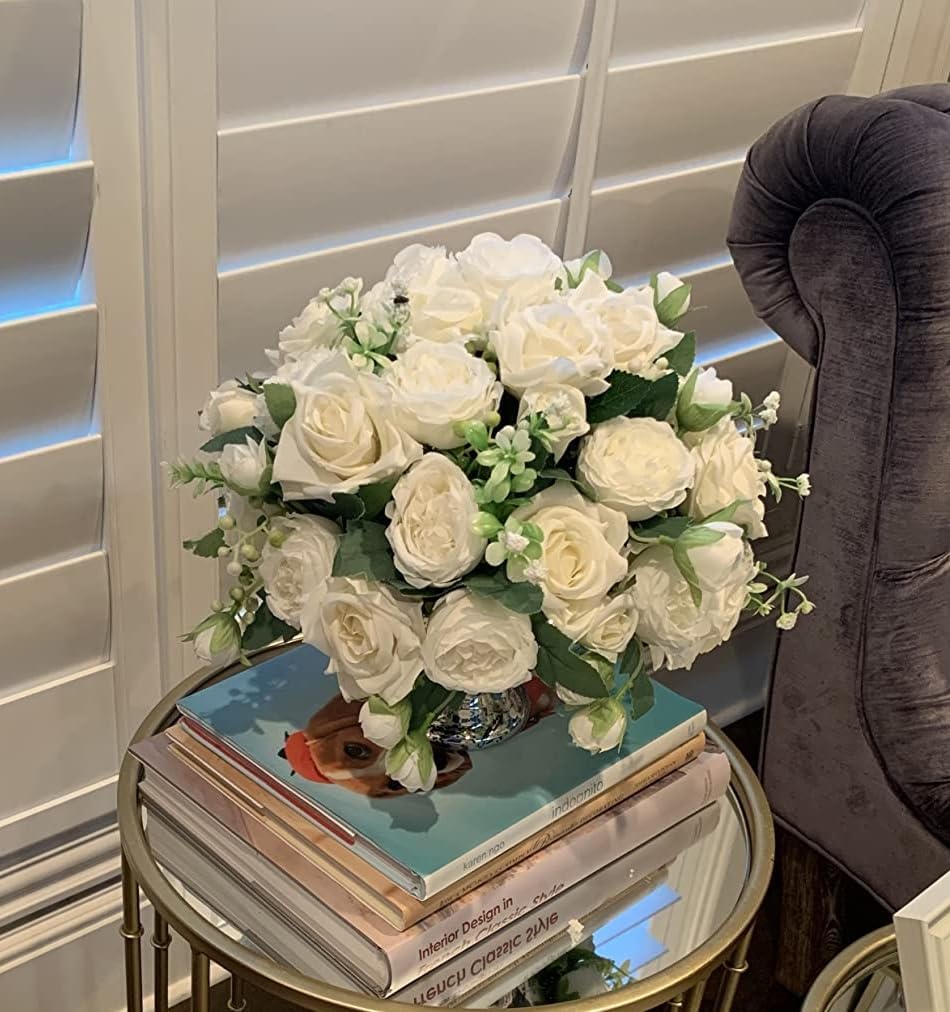
4
$16.98
In stock on Amazon
Check price on AmazonReal-Touch (Latex-Coated)
Real-touch peonies sit at the top of the realism hierarchy. Construction begins with a fabric or PE base and then coats each petal in a layer of liquid latex or silicone-based polymer. The result is a petal with actual give and texture when touched — it compresses slightly and springs back, mimicking the tactile behavior of a fresh petal in a way that neither rigid fabric nor rigid PE can achieve.
What it does well: Tactile credibility is the defining advantage. Brides’ editorial feature “The Best Artificial Flowers for Weddings, Tested and Reviewed” highlights real-touch as the format most likely to prompt a double-take from guests at close range. The latex coating also seals the petal surface, adding UV protection and making stems easier to wipe clean. For this reason, real-touch construction is the material of choice for bridal bouquets and hero centerpieces in luxury event work. Budget: real-touch single stems typically run $25–$60 each from reputable wholesale sources.
Where it falls short: Price and cold-weather fragility. The latex coating can become brittle in sustained cold — reviewers across multiple editorial sources report cracking when stems are transported unheated in winter temperatures below approximately 50°F / 10°C. This is a meaningful operational risk for outdoor winter events. The per-stem cost can also reshape your event math quickly when you’re working at volume.
When to buy it: Bridal bouquets, head-table centerpieces, installations where guests will touch or interact with the flowers, and any project being photographed professionally where the camera will be within two feet of the blooms.
VIERENA
$40.49
In stock on Amazon
Check price on AmazonRealism Markers You Can Spot From Product Photos
You can’t handle a stem before you buy online, but you can read images and product descriptions intelligently. Here’s what to look for before you commit.
Petal edge treatment. In a real peony, the outermost petals have slightly irregular, softly ruffled edges. In product photos, look for visible edge variation. Perfectly uniform, round petal edges are a red flag for economy silk construction.
Center density and color transition. A realistic peony center should look slightly compressed and show a different tone than the outer petals — the tight inner guard petals are usually a deeper or more saturated version of the main bloom color. Flat, uniform color from center to edge is a realism miss regardless of material tier.
Stem wrapping and leaf texture. House Beautiful’s roundup “The Best Artificial Flowers to Brighten Up Any Room” notes that leaf veining and stem-wrap quality are reliable proxies for overall construction quality — brands that invest in realistic foliage tend to invest equally in petal construction. Look for individually veined leaves with subtle color variation (not flat, single-tone green) and a stem wrapped in matte green tape rather than bare wire or shiny plastic.
Stated petal count. Premium silk and PE peonies in the $20–$50 range often specify petal count — typically 60–100+ petals per bloom. Economy stems rarely publish this figure. A published petal count is a reliable signal that the manufacturer is confident in the construction and wants buyers to know the detail level.
The Stem-Count Math for Centerpieces
This is where most buyers lose margin or end up short on event day. Here’s a framework you can apply directly to your current project.
Baseline Coverage by Application
| Application | Bloom diameter target | Stems per arrangement | Notes |
|---|---|---|---|
| Low centerpiece (≤10 in. tall) | 4–5 in. peony | 5–7 stems | Add 2–3 filler stems for density |
| Tall vase centerpiece (18–24 in.) | 4–5 in. peony | 9–12 stems | Height adds stem count quickly |
| Bridal bouquet (round, medium) | 3–4 in. peony | 7–9 stems | Mix bloom stages for realism |
| Wedding arch (8 ft. standard) | 4–5 in. peony | 60–80 stems | Cluster in 3-stem groups |
The Underlying Coverage Math
A 4–5 inch peony bloom — the most common format for artificial peonies — covers roughly 16–20 square inches of visual surface area. A standard low centerpiece vessel, say a 6-inch-diameter compote, needs approximately 80–100 square inches of visual coverage to look full rather than sparse. That’s your 5–7 stem floor. Add one stem for every inch of vessel width beyond 6 inches and you’ll land in the right range for most vessel shapes.
For event work at volume, apply a 10% overage on your total stem count to account for stems that arrive damaged or that you reject during quality control. On a 400-stem order for a forty-table reception, that’s 40 buffer stems — roughly $400–$1,200 depending on material tier, but far less than the cost of a last-minute reorder with expedited shipping the week before the event.
Apartment Therapy’s guide “The Best Faux Flowers That Actually Look Real” reinforces this point directly: underfilling is the most common amateur mistake in artificial arrangements, because faux stems don’t have the natural drape and volume-fill that fresh stems provide once placed in water. You need to slightly overcompensate with stem count to achieve visual equivalence to a fresh arrangement of the same vessel size.
The Decision Frame: If X, Then Y
If you’re building permanent or semi-permanent installs in residential or hospitality settings where clients will interact with arrangements daily: buy PE or real-touch. The additional per-stem cost is justified by multi-year deployment — the cost-per-year math favors premium materials over budget silk that degrades or fades within twelve to eighteen months.
If you’re outfitting large-scale event backdrops, arches, or stage installations viewed primarily at five feet or more: buy premium silk. Trade-grade polysilk peonies will deliver the visual read you need at a per-stem cost that makes volume orders feasible without breaking the event budget.
If you’re producing a high-end wedding where bridal florals will be photographed professionally and guests will touch or hold arrangements: buy real-touch for hero pieces — bouquets and head-table arrangements — and drop to PE for perimeter guest-table centerpieces. This hybrid approach, noted in Brides’ coverage “The Best Artificial Flowers for Weddings, Tested and Reviewed” as standard practice among professional faux-floral designers, delivers maximum realism at the moments that matter most without pricing the entire event out of range.
If you’re sourcing for a first project and still calibrating your eye: order one stem each from three different material tiers from the same supplier. The in-hand comparison will teach you more than any product description, and you’ll have a clear visual reference standard before committing to a full event order.
Material choice is only half the equation — realism lives equally in stem count, proportion, and arrangement density. Get both right, and a well-sourced faux peony arrangement will outlast a fresh one by years.