May 15, 2026 • Celeste Morrow • 9 min reading time • Prices verified June 6, 2026
Faux Mums, Kiku, and Chrysanthemums: Untangling the Name Confusion and Finding the Best Stems
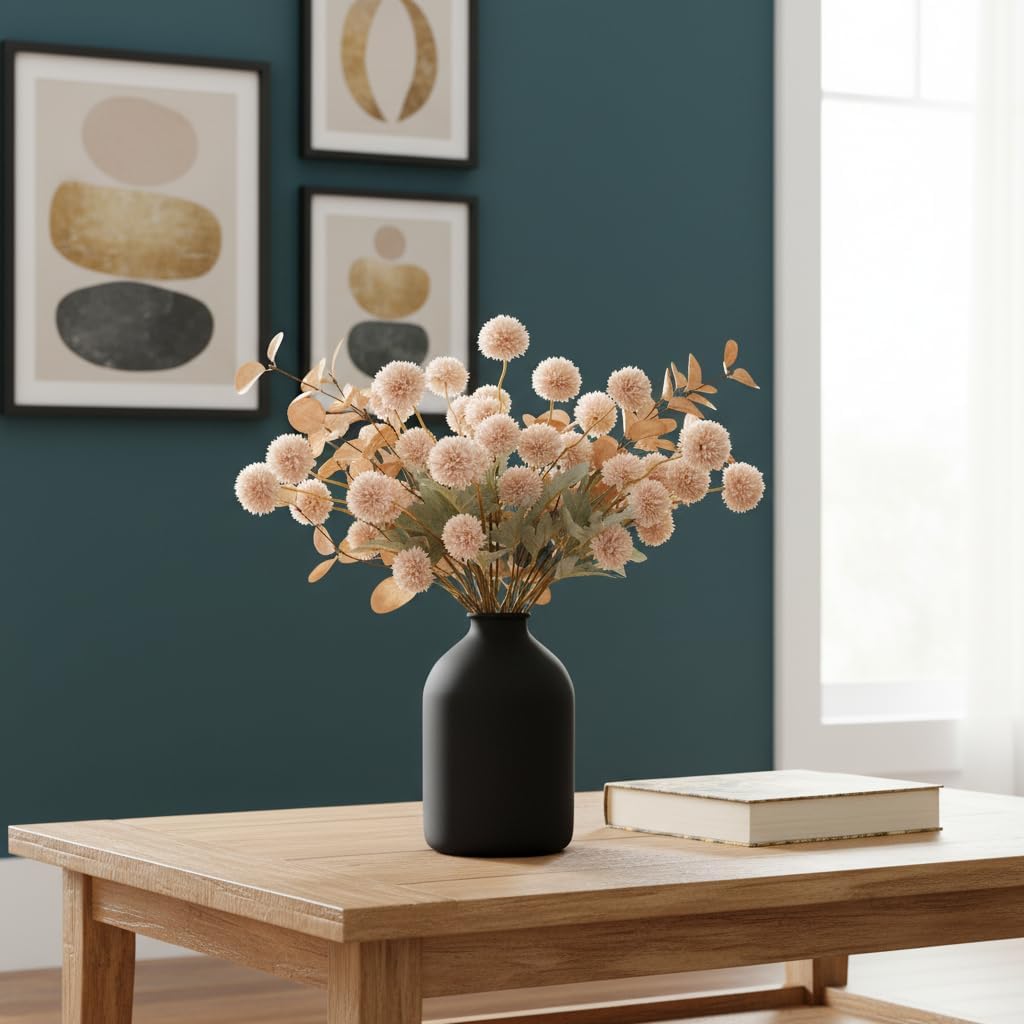
If you’ve ever searched “faux chrysanthemum stems” and come back with listings labeled mums, kiku, spider mums, football mums, and pompom mums — all supposedly the same flower, all looking wildly different in the photos — you’re not missing something. The naming genuinely is a mess, and it costs buyers real money when they order one thing and receive another. Here’s the short version before we go deeper: chrysanthemum is the botanical name for the entire species; “mum” is the everyday shorthand used across most North American retail listings; and “kiku” (菊) is the Japanese word for the same flower, used specifically in ikebana (the Japanese art of flower arranging) and increasingly adopted by premium faux-floral brands to signal a more refined, structured bloom form. All three names point to the same plant family, but in the faux-floral market they’ve quietly become shorthand for different aesthetic registers and, often, different quality tiers. This guide breaks down what each term signals on a product page, maps the bloom forms you’ll actually encounter, and gives you a decision framework for matching stem type to project type.
Why the Same Flower Has Three Names on Product Pages
The naming split isn’t arbitrary — it tracks how different retail channels talk to different buyers.
“Mum” dominates mass-market listings at Michaels, Hobby Lobby, and most Amazon storefronts. It’s accessible, searches well, and carries no stylistic freight. When you see “mum” in a listing title, you’re usually looking at a rounded, densely petaled bloom — the classic fall décor workhorse — in the $4–$18 per stem range. These are typically made from polyester or polysilk (a tightly woven synthetic that mimics soft petals). Realism varies enormously at this tier.
“Chrysanthemum” appears across mid-tier brands like Nearly Natural and Afloral, as well as specialty wholesalers. It’s used more precisely — often paired with a form descriptor like “spider chrysanthemum” or “button chrysanthemum” — and signals that the listing is trying to communicate bloom geometry, not just a vibe. Stems in this category typically run $8–$35 individually, or are sold in bundles designed for arrangement building.
“Kiku” is where things get interesting for practitioners. The term has been picked up by premium and designer-adjacent brands — including some Winward Silks offerings and several Primrose London seasonal releases — to describe highly structured, Japanese-aesthetic bloom forms: tight, layered petals with visible curvature at each tip, often in ivory, blush, and deep burgundy colorways. Brides.com’s wedding flower glossary notes that kiku forms are increasingly specified by wedding stylists for their architectural quality in centerpieces and ceremonial arrangements. At this tier, you’re looking at $18–$55 per stem for silk, and considerably more for preserved real-touch versions.
The practical risk for a practitioner: ordering “mums” when your client approved a kiku-style arrangement — or vice versa — is a presentation problem. The bloom geometries are distinct enough that substitution reads as a mistake, not a variation.
Bloom Forms You’ll Actually Encounter (and How to Identify Them from Photos)
There are dozens of chrysanthemum cultivars in nature, but the faux-floral market has consolidated around four dominant forms. Knowing these by name lets you evaluate product photos accurately without holding the stem.
1. Pompom / Button Mum Tight, spherical, densely packed petals with almost no visible center. This is the most common form in mass-market faux listings. Easy to spot: the bloom looks like a perfect ball. Realism markers to check in photos: do the outermost petals curve slightly downward (as they do in nature), or do they stick straight out like a fiber-optic lamp? Straight-out petals are a low-realism tell.
2. Football Mum Large, globe-shaped bloom — typically 4–6 inches in diameter in the faux versions — with petals that curl inward at the tips. These are the statement blooms for wedding arches and event backdrops. The Spruce’s updated 2026 review of artificial flowers specifically calls out football mum stems as a high-impact, high-forgiveness choice for large installations because the size reads as intentional rather than approximate.
3. Spider / Fuji Chrysanthemum Long, thin, tubular petals radiating outward from the center — the most structurally distinctive form, and the one most often labeled “kiku” at the premium tier. In nature, the petals can curve, hook, or remain straight depending on cultivar. In faux versions, the detail quality of those individual petal tips is the primary realism marker. Look for photos that show individual petal definition at the tip; if the listing photos are too distant to reveal tip detail, that’s a signal the manufacturer isn’t proud of it.
4. Anemone / Single-Form Chrysanthemum A flat, daisy-like bloom with a single or double ring of petals around a visible center disk. Less common in faux listings but increasingly relevant for minimalist and Japanese-inspired interior work. The center disk is where realism lives or dies — reviewers across aggregated listings consistently flag that painted plastic centers are the fastest realism-killer in this form.
Material Tiers and What They Mean for Your Project
The faux-floral material landscape has three tiers that matter for chrysanthemum stems specifically:
Polysilk and standard polyester cover most of the mum market under $15 per stem. Colorfast for 12–18 months in indirect light, per manufacturer guidance from several mid-tier brands. Adequate for seasonal tablescapes and short-cycle event rentals. Petal feel is noticeably synthetic under direct handling — a real consideration for close-contact displays like escort card tables and guest lounge arrangements.
Real-touch latex and PE (polyethylene) represent the mid-to-premium silk tier ($20–$55 per stem at retail). PE chrysanthemum petals, in particular, have enough translucency and surface texture to pass casual scrutiny at arm’s length. House Beautiful’s February 2026 styling guide notes that PE blooms are the current sweet spot for interior designers who need photographable results without preserved-floral pricing. The trade-off: PE stems are slightly more vulnerable to heat and prolonged UV exposure than polysilk, and the petal edges can develop micro-tears over years of handling.
Preserved real chrysanthemums — the actual flower, dried and treated with glycerin or silica — occupy a separate category that brands like Venus ET Fleur and some Primrose London collections use for their highest-tier products. Architectural Digest’s January 2026 feature on preserved botanicals in luxury interiors cited preserved chrysanthemums specifically as an emerging choice for hospitality buyers who need the tactile authenticity of a real petal with a multi-year display lifespan. The cost differential is significant ($40–$120+ per stem is not unusual for preserved kiku forms), and care requirements are real: no direct sunlight, low humidity environments, no water. For a boutique hotel lobby or a high-end residential install, the cost-per-year math can actually favor preserved over high-end silk when a three-to-five year lifespan is baked in.
By the Numbers
| Form | Typical Faux Price Range | Best Use Case | Realism Ceiling |
|---|---|---|---|
| Pompom / Button | $4–$15/stem | Seasonal décor, craft projects | Medium |
| Football Mum | $10–$30/stem | Event backdrops, arches | Medium-High |
| Spider / Kiku | $18–$55/stem | Centerpieces, luxury installs | High (PE/latex) |
| Preserved Chrysanthemum | $40–$120+/stem | Hospitality, long-cycle residential | Highest |
Sourcing Intelligence: What to Look For Before You Order
At the practitioner level, you’re rarely making a single-stem decision. Here’s how to pressure-test a supplier before committing volume.
Photo scrutiny protocol: Any supplier worth using at $200+ per order should have close-up images showing individual petal texture, stem wrap (wire stems should be wrapped in floral tape or fabric, not bare green plastic), and leaf veining. The Floral Design Institute’s chrysanthemum form reference notes that realistic leaf venation — visible secondary veins branching from the midrib — is one of the clearest quality differentiators between production tiers, and it shows in photos if the photographer isn’t hiding it.
Stem wrap matters more than most buyers price for: Wrapped stems blend into hand-tied bouquets and arrangements without tape intervention. Bare wire stems require additional labor time, which erodes the cost advantage of a cheaper stem quickly if you’re building at volume.
Colorway consistency: Spider and kiku forms in particular are prone to dye-lot variation between production runs. Reviewers across multiple aggregated sources flag this specifically for burgundy, terracotta, and deep plum colorways — popular for fall wedding work — where two ostensibly identical bundles can read as noticeably different tones in the same arrangement under warm lighting. Order a sample stem from any new supplier before committing to a full event quantity.
Return and damage policies: For volume orders, understand whether the supplier accepts returns on unopened bundles and how they handle damage claims. The Spruce’s 2026 artificial flower review notes that reputable mid-to-premium suppliers typically offer a 30-day return window on factory-sealed bundles — a meaningful signal of production confidence.
The Decision Framework
If you’re sitting with a project spec right now, here’s the if/then:
If the blooms will be seen from more than 4 feet away (event backdrops, arch installations, stage décor), football mums in standard polysilk deliver the visual mass you need without the premium per-stem cost. Allocate budget to quantity and stem count, not material grade.
If the blooms will be seen at arm’s length or handled by guests (centerpieces, escort tables, boutique hotel reception desks), move to PE or real-touch latex in a spider or kiku form. The tactile and photographic realism difference justifies the price gap. Brides.com’s glossary specifically recommends this tier for wedding tablescape work where guests interact with arrangements throughout an event.
If the installation is long-cycle residential or hospitality (12+ months in situ, client expecting zero maintenance), preserved chrysanthemums are the honest answer. Run the cost-per-year math against high-end silk: a $90 preserved kiku stem lasting four years costs $22.50 per year; a $30 PE stem replaced every 18 months costs $24 per year and involves a service call. The numbers often converge faster than clients expect.
If the project has a seasonal or one-event lifespan, polysilk pompom and button mums at $6–$12 per stem are entirely defensible — and recommending a cheaper option here isn’t cutting corners, it’s allocating the client’s budget correctly.
The name on the listing matters less than the bloom form, the material, and the use-case fit. Once you can read a product page for those three things, “mum” versus “kiku” versus “chrysanthemum” becomes what it actually is: marketing language sitting on top of a purchasing decision you already know how to make.